
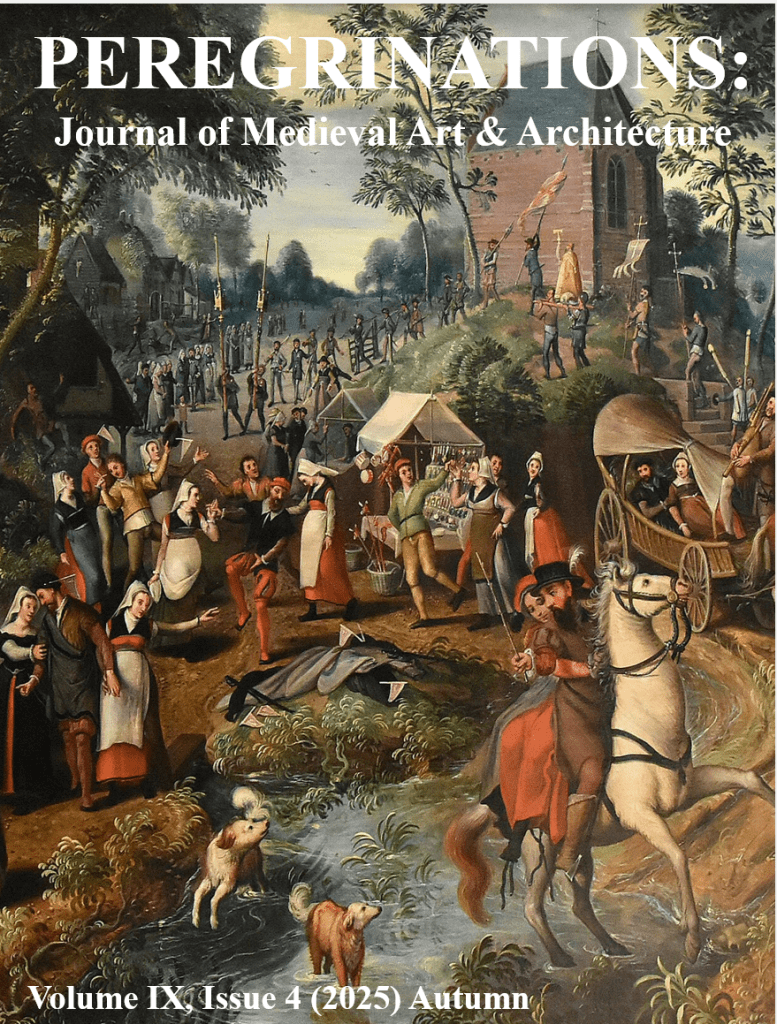
Welcome to Volume 9, Issue 4
The articles presented here grapple with how our understanding of medieval objects changes with time, including our assumptions from not that many years ago. The pieces, as analyzed here, show the complex ideas that formed the objects and how they were received, understood, used, and looked at.
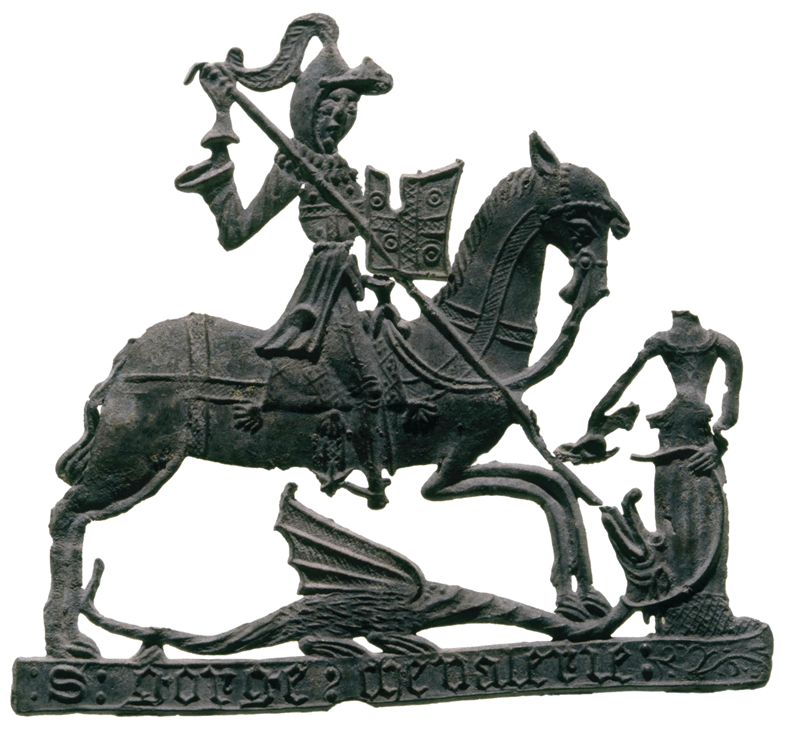
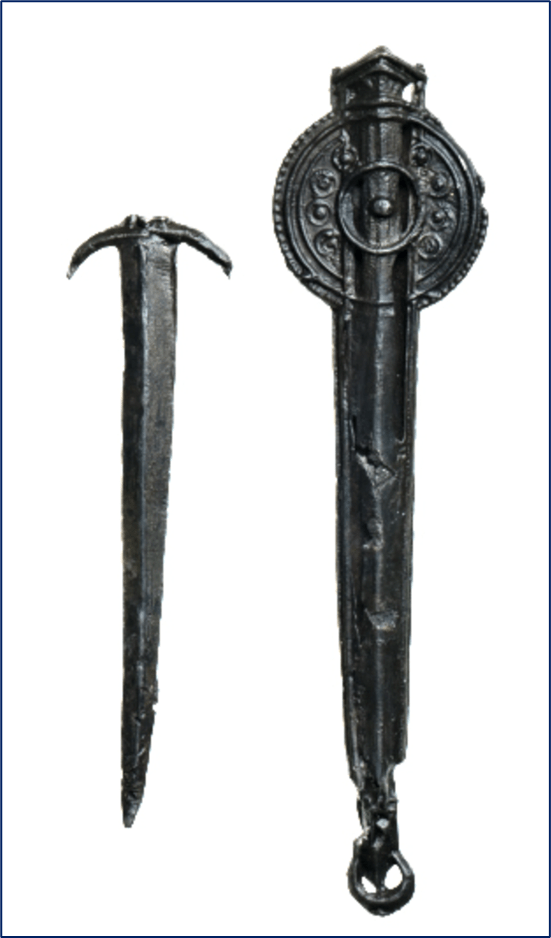
The first section features articles edited by Ann Marie Rasmussen based on a session, “Medieval Badges and Miniature Objects” presented at the International Congress on Medieval Studies, Kalamazoo, Michigan in 2021 organized by Rasmussen and Lloyd de Beer. Each essay looks at tiny later-medieval, mass-produced objects and analyzes them in terms of how our own modern-day interpretations might need to be recalibrated to understand how they may have actually been used and understood when produced, especially in terms of records, literary tropes, and more. Eliot Benbow explains the production of toys and pilgrimage objects in the context of customs records, while Jan Huyghe and Ann Marie Rasmussen explore the literary and linguistic humor in the salacious miniature penis in a pan. Jennifer Lee suggests reclassifying the sword badges traditionally linked to the cult of St Thomas Becket at Canterbury as tournament badges expressing affiliation much as pilgrim badges did. Hanneke Van Asperen investigates pilgrim souvenirs that went beyond badges, including banners, mirrors, rosaries, jewelry, and embossed badges as pendants. Some were purchased onsite, while others were assembled later, the owner creating their own sacred piece.
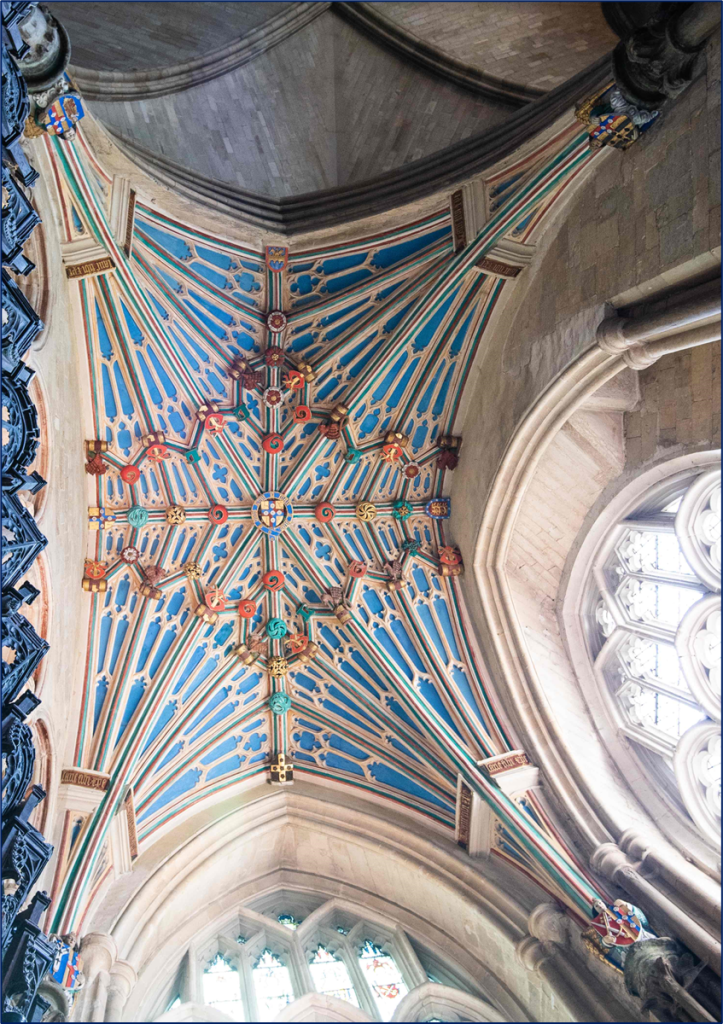
The second section continues this reconsideration and re-contextualization with Betsy Dominguez questioning the unusual iconography of the ‘Stonehenge’ miniature in BL Egerton MS 3028, including where it follows and where it steps away from the text and why. Matthew J. Champion explores the unusual appearance of a camel badge in Dunwich, Suffolk and its possible link to the appearance of an actual camel in that location in the 1520s. Nicholas Riall investigates how differing opinions of what could be considered medieval original color schemes at Winchester Cathedral caused a good deal of trouble when restoration was undertaken in the 20th century and how the questioning continues. Abigail Berry’s review of The Trees of the Cross: Wood as Subject and Medium in the Art of Late Medieval Germany by Gregory Bryda also canvases how the natural world, especially wood “was shaped by religious thought in the centuries preceding the Reformation.”
Feature Articles
Special Section on Medieval Badges and Miniature Objects, edited by Ann Marie Rasmussen


Other Feature Articles


Book Review

Cut and Sell: Two Parchment Fragments and the Collection of Ethiopian Manuscripts in the West
Caitlin Mims
The Iconography and Roles of an Ascetic Monk: A Painting of Abba Samu’el of Waldabba
Madison Gilmore-Duffey
The Future
For future issues we are actively seeking articles on any aspect of medieval art and architecture, including: long and short scholarly articles, scholarly book reviews, review articles on issues facing the field of medieval art history, interesting notes and announcements, useful website recommendations, new archeological discoveries, and recent museum acquisitions. We are interested in publishing articles that will undergo double-blind review as well as those which are subject only to regular editing processes, including articles that are the result of preliminary research. We are also looking for images to add to our photobank, to be shared and used by anyone in the classroom and in their research. To round out the scholarly portion of the journal, we are also seeking short, amusing excerpts from medieval sources, comments on the Middle Ages in movies and popular culture, etc.
Our grateful appreciation and thanks for partial funding provided by Kenyon College. Programming and copy-editing: John Pepple and Artistic Advising: Karen Gerhart.
Again, welcome to Peregrinations. Any suggestions or comments you have concerning the journal would be most welcome.
Sarah Blick, Editor
 Peregrinations: Journal of Medieval Art & Architecture